Intel 18A Yields Climb 7-8% Monthly as Foundry Books Multiple New Customers
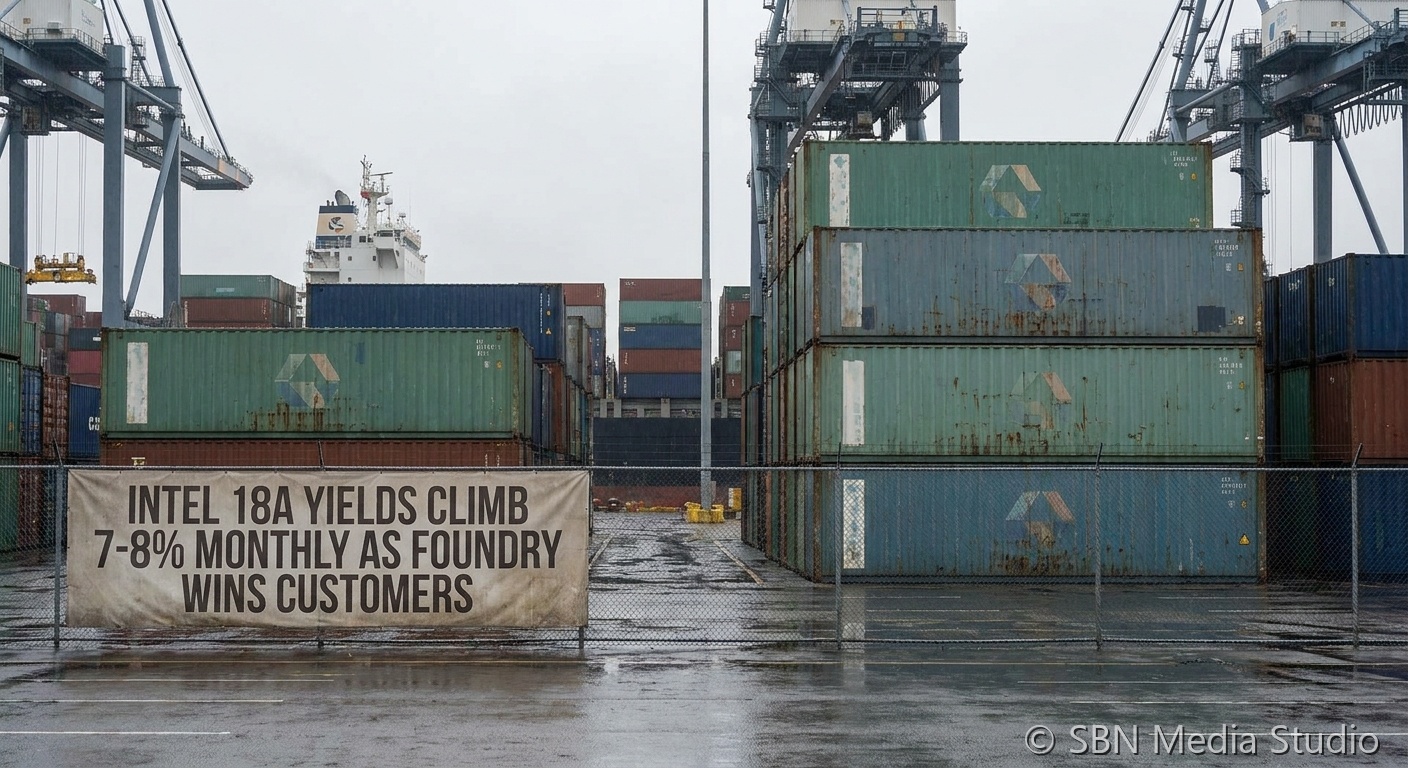
Intel chief executive Lip-Bu Tan told CNBC on Monday, May 18, 2026 that the company's foundry turnaround is now visible in the numbers, with 18A process yields improving 7% to 8% per month — a pace he described as matching industry best practice for a node moving from risk production into volume. Intel is now expecting commitments from multiple external foundry customers in the second half of 2026, after spending most of the past year publicly contained to internal Panther Lake and Clearwater Forest programs. Tan called Intel Foundry a 'national treasure' and said the inbound interest has shifted from exploratory PDK requests to formal qualification work.
The customer pipeline is broader than Apple. Tom's Hardware and TrendForce report that Microsoft plans to produce its second-generation Azure AI accelerator, Maia 2, on Intel 18A, and that NVIDIA is exploring fabricating the I/O die of its 2028 'Feynman' GPU architecture on either 18A or its successor 14A, while keeping the compute die on TSMC. The arrangement would route roughly 25% of the Feynman wafer content through Intel and use Intel's EMIB advanced packaging for the interconnect — the first time NVIDIA has formally split a flagship accelerator across two leading-edge foundries. Apple already has Intel's 18A-P PDK 0.9.1 running in internal simulations under the preliminary deal announced earlier this month.
The momentum is also commercial. Intel shares are up roughly 240% year to date on the back of the Apple framework, an $11 billion U.S. government convertible-equity package tied to the foundry build-out, and back-to-back upward earnings revisions. Tan has framed agentic-AI demand as the inflection point pulling forward CPU and packaging orders, and CFO David Zinsner has said advanced-packaging revenue will now be measured in billions of dollars rather than hundreds of millions. The 18A node still has to deliver a clean external tape-out before any of these customer commitments translate into wafer revenue — but for the first time since the foundry pivot was announced in 2021, Intel is reporting the kind of yield curve that makes those tape-outs plausible.
Sources
CNBC, Tom's Hardware, TrendForce